

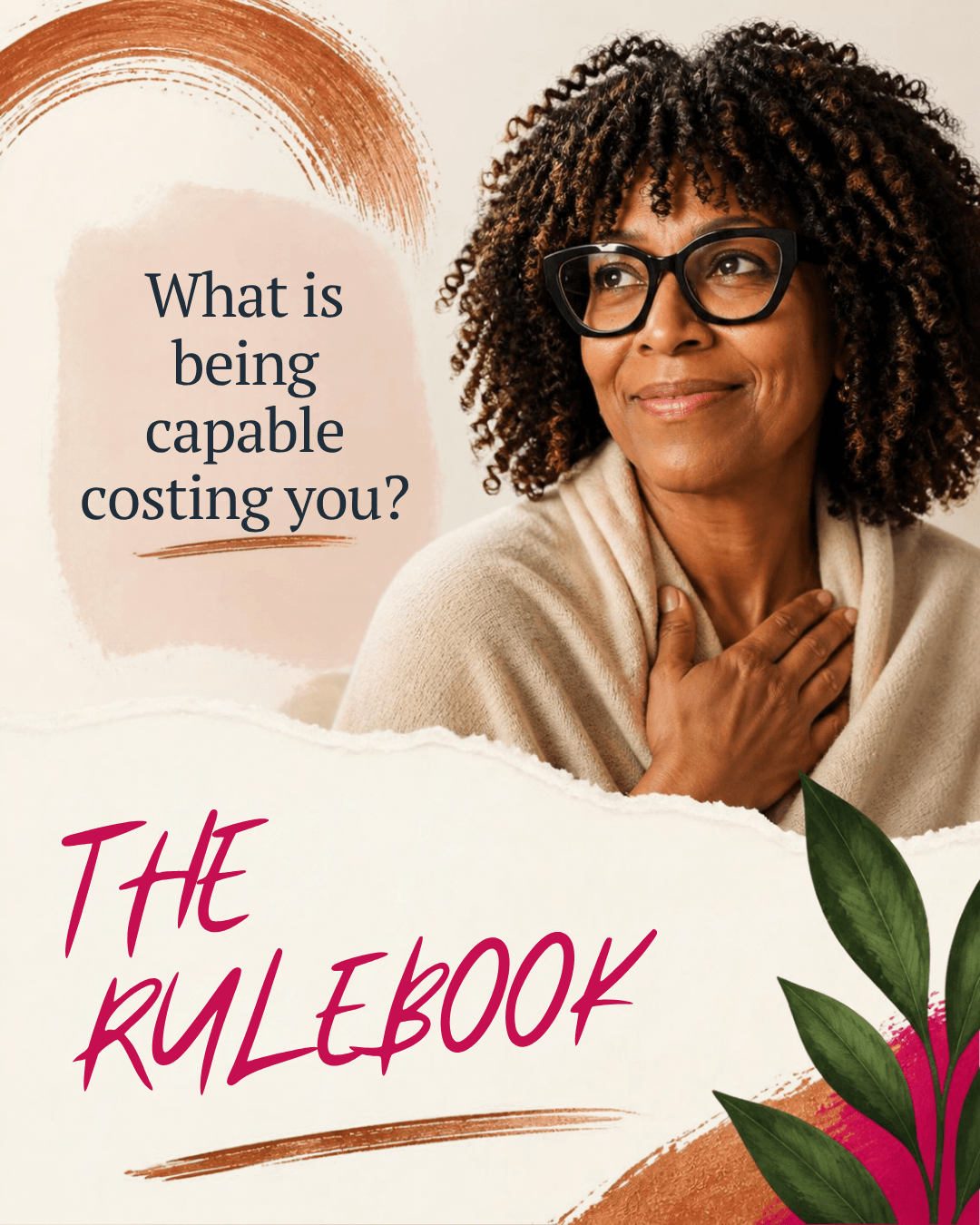
The Rulebook is Sonia Jenkins' term for the invisible expectations women can absorb about how a “good” woman should behave: be useful, put others first, don't make a fuss, keep going, don't let people down and cope without complaint. Nobody has to hand her these rules. Over time, they can become so internalised that she enforces them herself.
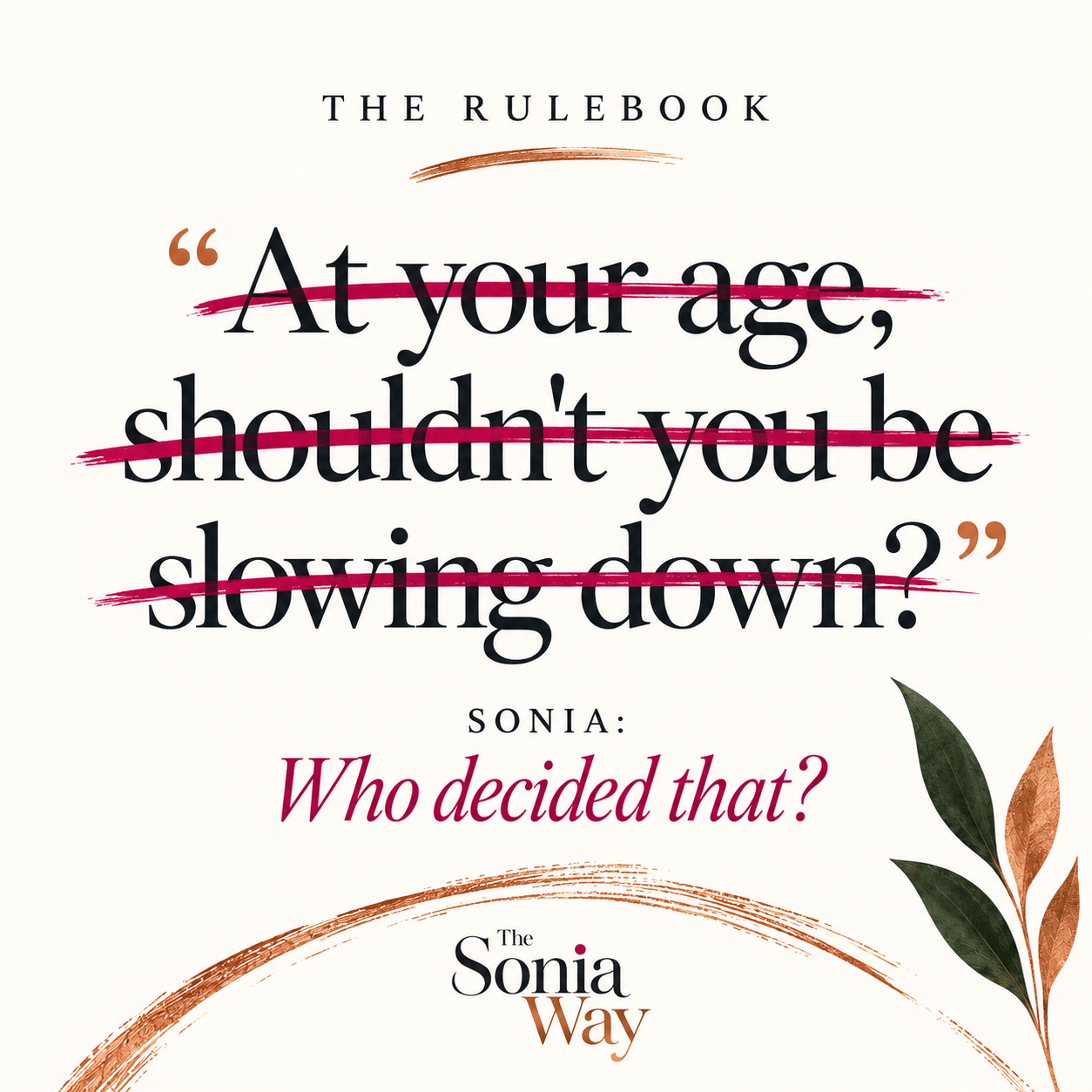
Some rules have had their day.
Time to write our own.
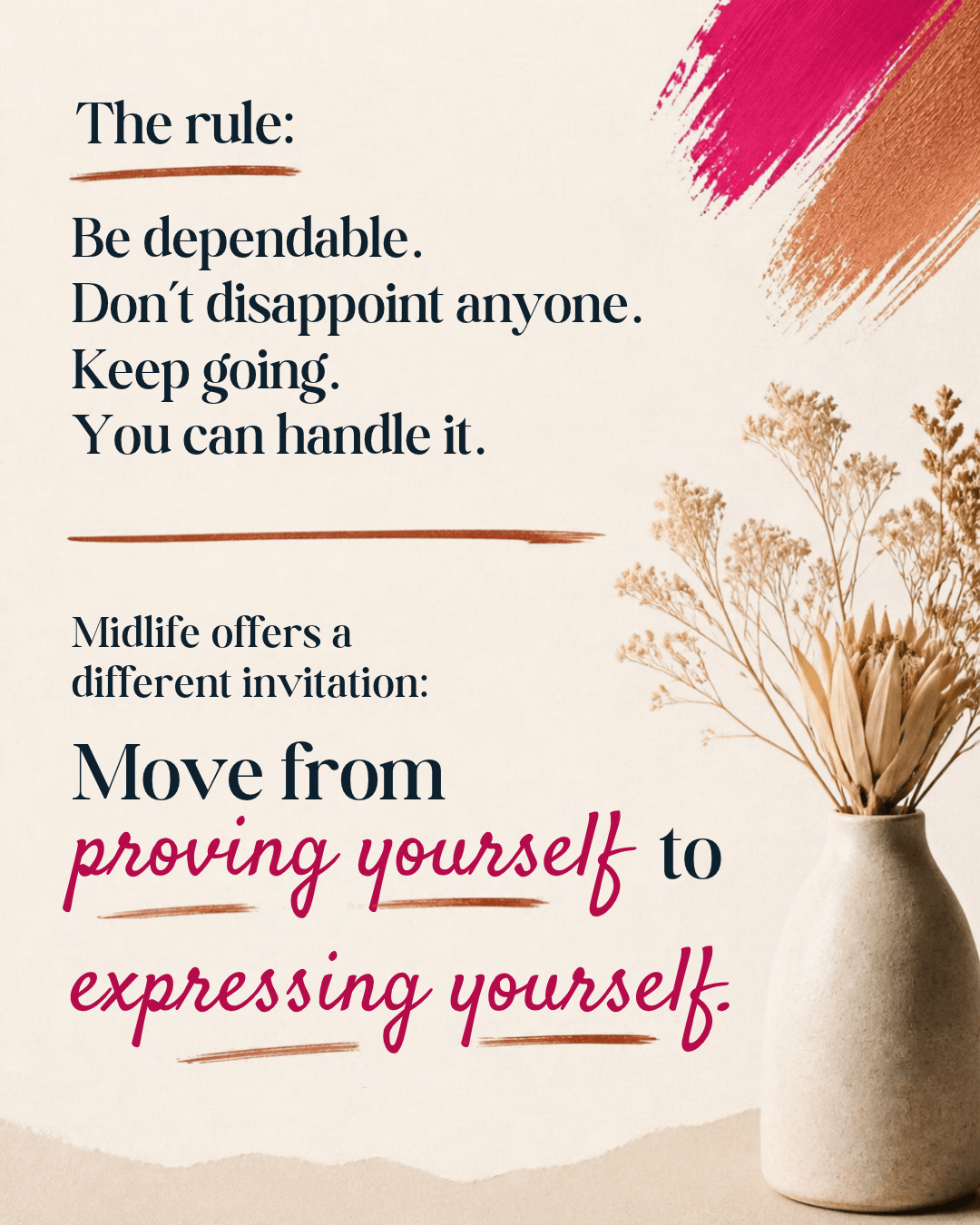
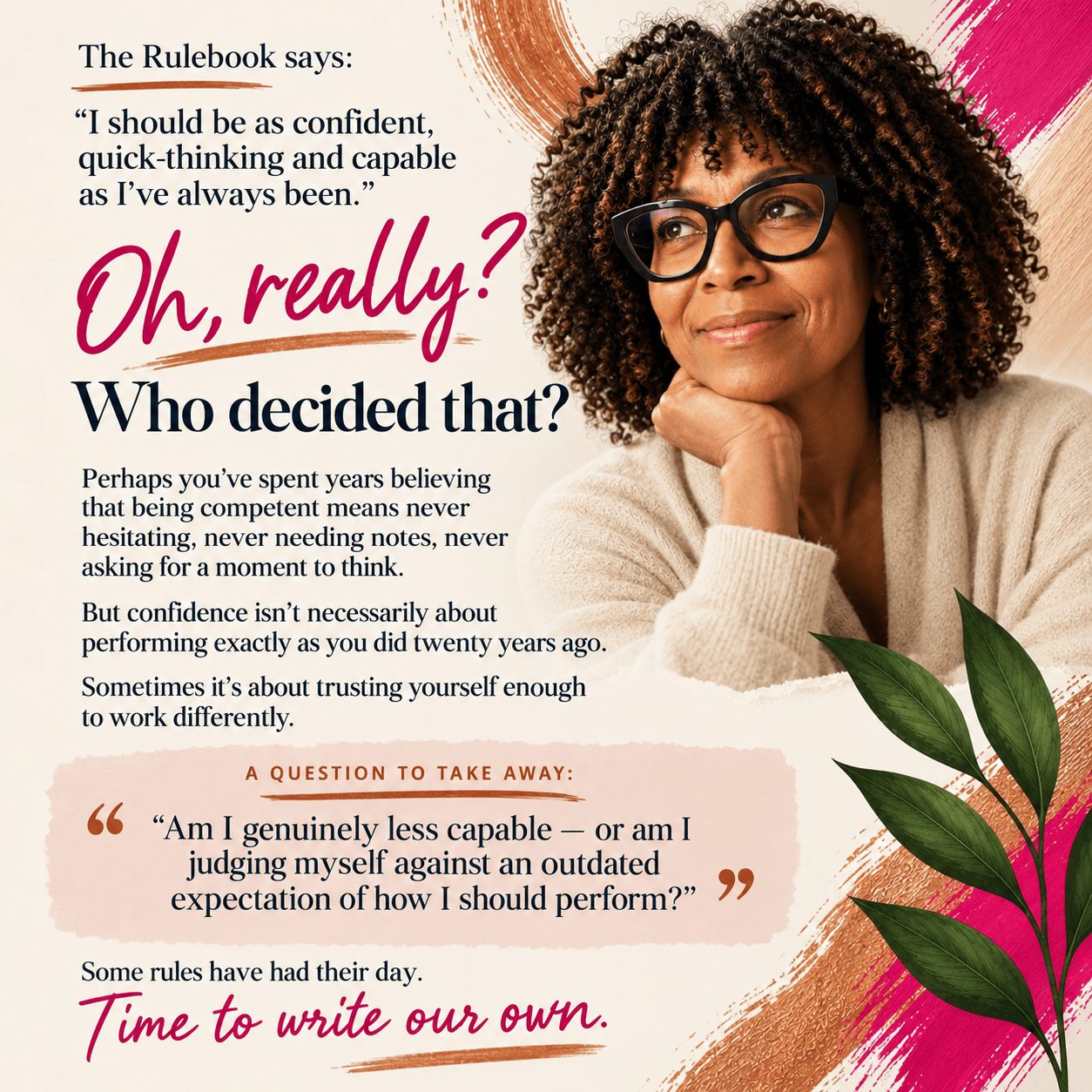
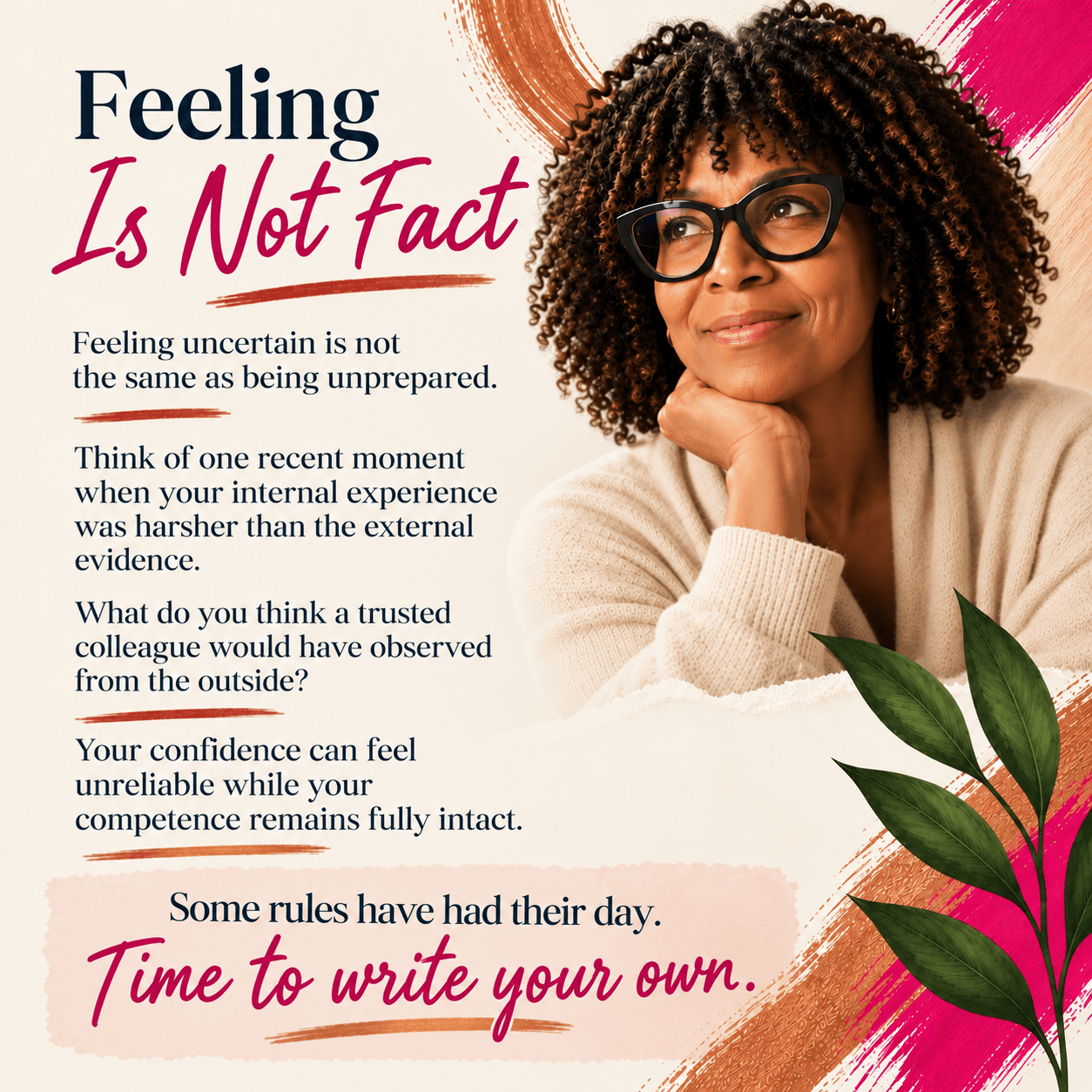
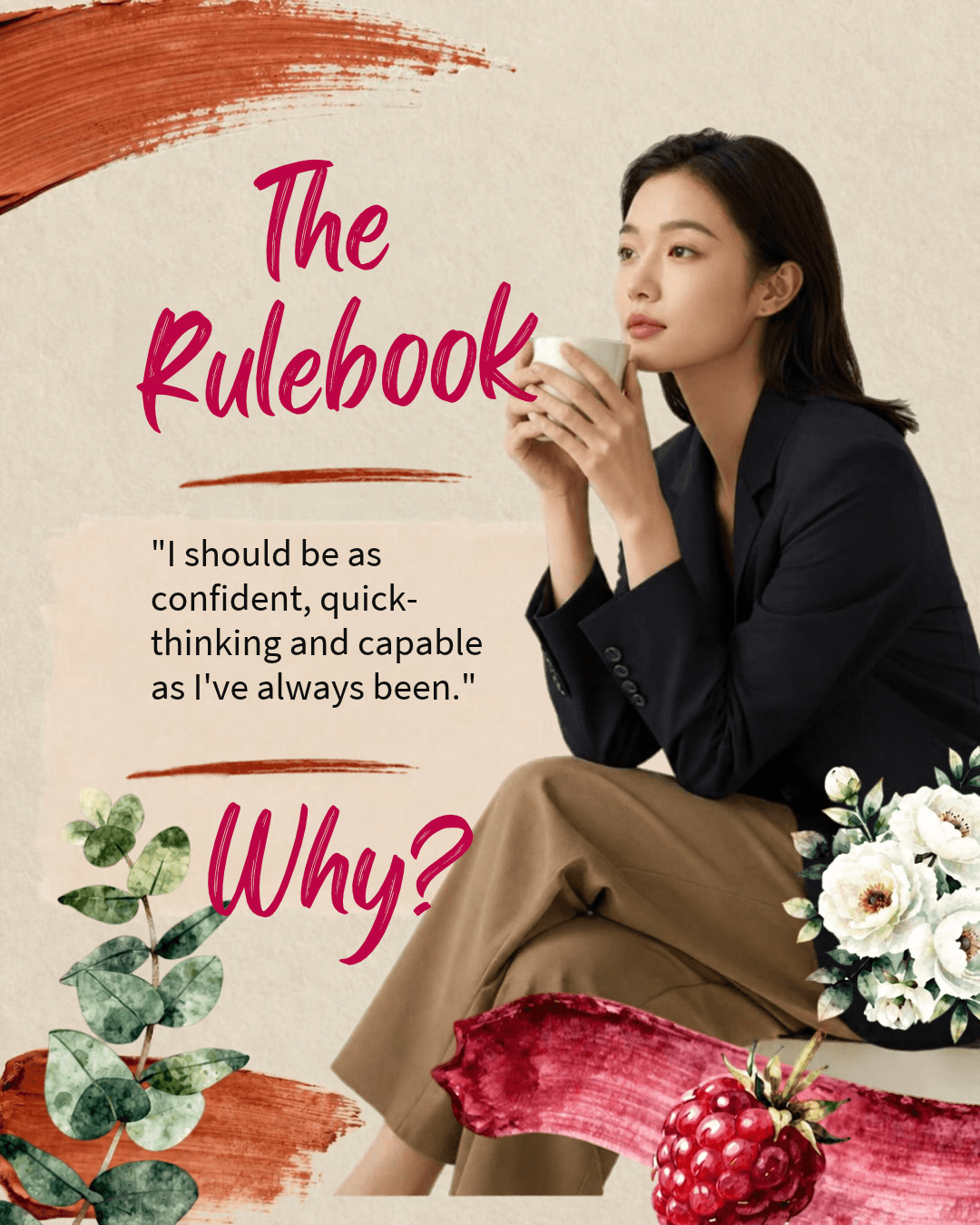
Some rules have had their day.
Time to write our own.
Where does The Rulebook come from?
The Rulebook is Sonia Jenkins' term for the unspoken expectations many women absorb about being useful, dependable, selfless and able to cope. Nobody necessarily gives a woman these rules. They can be learned through family, work, culture and years of being rewarded for putting other people's needs first. By midlife, they may be so deeply internalised that nobody else needs to enforce them. We do it ourselves.
How do I know I'm living by The Rulebook?
Listen for the word “should.” I should be able to manage. I shouldn't need help. I should put everyone else first. I should be grateful. I should be able to cope like I used to. The Rulebook often sounds less like somebody telling you what to do and more like your own voice telling you what a “good” woman ought to be. A useful question is: Who decided that?
Why is it particularly visible in midlife?
Because midlife has a habit of exposing rules that no longer fit. Your body may be changing, your capacity may be different and the roles you've spent years fulfilling may be shifting — yet you can still expect yourself to function according to yesterday's rules. That's why I say: Yesterday's expectations. Today's physiology.
Do I have to become selfish to reject The Rulebook?
No. Rejecting a rule that no longer serves you doesn't mean you stop caring about other people. It means you stop disappearing from the equation. This isn't “me first at everybody else's expense.” Sometimes the rebellion is simply “me too.”
Which Rulebook rules might I question?
Start with the ones that make you tired just reading them: I should be able to manage. I mustn't let anyone down. It's quicker if I do it myself. I'll rest when everything is done. Everyone needs me. I shouldn't make a fuss. I should be grateful. I should be able to cope. You don't have to replace them all with new rules. Start by asking: Is this actually true — and who decided it?
“Why am I still capable of doing everything but increasingly resentful that I have to?”
Because being capable of carrying something doesn't mean it should automatically be yours to carry. Resentment can be useful information. It may be telling you that something you've always done automatically now deserves a choice. Before asking, “Why can't I just get on with it?”, try asking, “Do I still want to?”
“Why do I feel invisible when everybody relies on me?”
Because being needed and being seen are not the same thing. People may see what you do, what you solve and what you provide without necessarily seeing the woman underneath those roles. And after years of focusing on everybody else, you may have stopped seeing her too. She hasn't gone
anywhere. She may simply need some space to be heard again.
“Why can't I rest without feeling guilty?”
Because somewhere along the way you may have learned that rest has to be earned. Finish the work. Sort everyone else out. Be productive first. Then you're allowed to stop. The problem is that a capable woman's work is rarely completely finished. Try asking: What if rest isn't a reward for finishing everything? What if it's something a human body actually needs?
“What happens when being the capable one becomes too much?”
Often, you become even more capable. You push harder, organise better, compensate, keep going and make sure nobody notices how much it's costing you. Until perhaps you notice. Being capable isn't the problem. The question is whether capability has quietly become an expectation that you're available to carry everything, all the time. You don't have to stop being a capable woman. You just have to stop carrying the cost of being capable all the time.